
A Fire Door Can Pass the Test and Still Get Rejected on Site
A passing fire test doesn't guarantee project acceptance. CODEX helps manufacturers ensure tested configurations match real-world installation requirements, standards, and approvals.
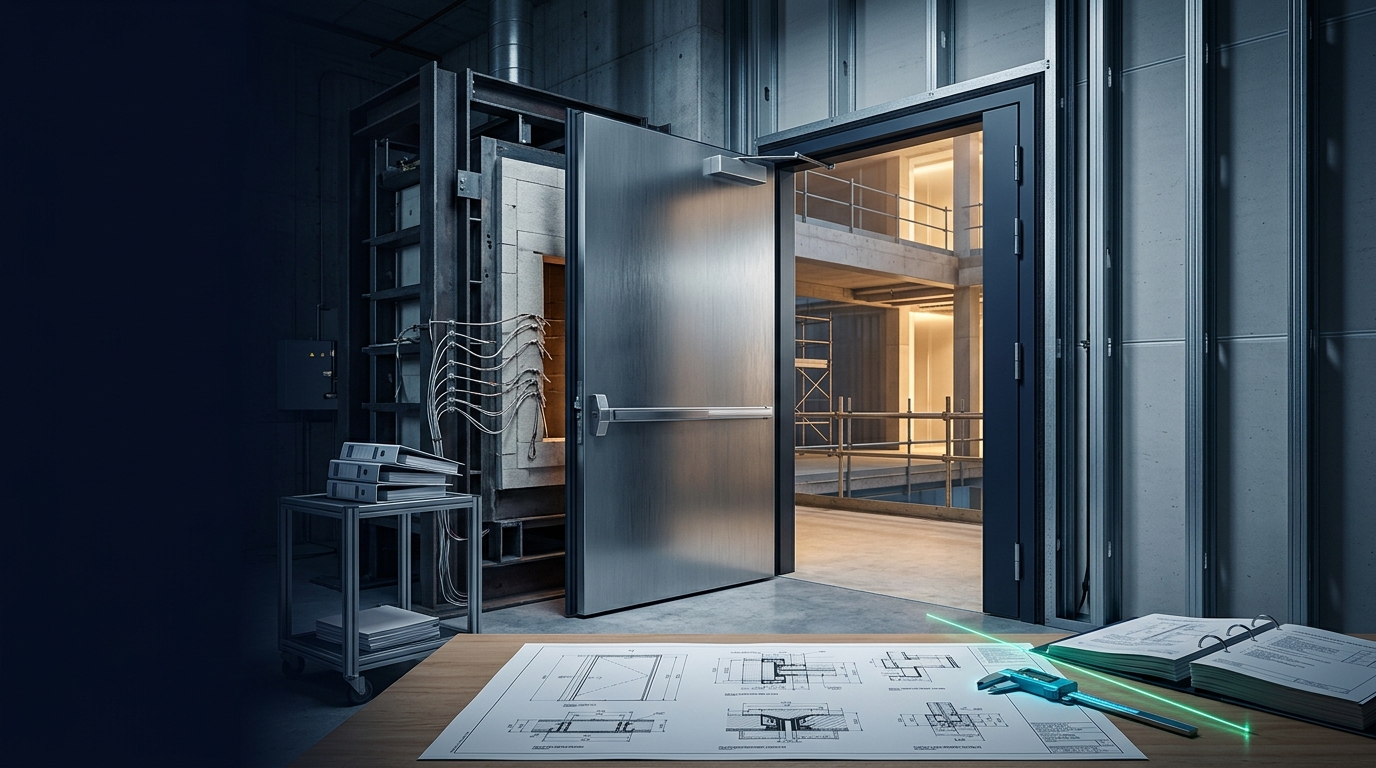
A manufacturer tests a fire door assembly, gets a passing result, and assumes the compliance work is done. Then a project consultant reviews the submittal and rejects it — the installation condition tested wasn't the one actually specified for the building. Different clearances.Different substrate. The certificate is real. It just doesn't cover the application it's being used for.
Now there's a choice: re-test for the correct configuration, or lose the project.
Fire product compliance is rarely a simple testing exercise.
A passing test result answers one narrow question: did this exact sample, in this exact configuration, perform to standard.It doesn't answer whether that configuration matches what's actually needed on a real project different substrates, different installation details, a different fire rating than the one originally tested for.
Manufacturers are managing all of this at once: which standard actually applies in the target market, whether the current design even matches the intended rating and installation condition,what evidence certification actually requires, and whether an existing test report can be extended to cover a new variant — or whether it can't, and a new test is unavoidable.
Where this actually costs a company
The expensive mistake isn't failing a test. It's passing the wrong test — one that technically works but doesn't match the field application, the market's approval expectations, or the project it's ultimately meant to be used on. By the time that gap shows up, it's usually at project submittal stage, in front of a consultant or authority who has the power to reject it outright.
This is where Codex comes in
CODEX is CoralDune's advisory practice for manufacturers and suppliers of fire and life safety products — fire doors,dampers, penetration seals, fire-rated ducts, compartmentation systems, and selected suppression categories. It acts as an independent technical interface between the manufacturer, testing laboratories, certification bodies, and approval authorities.
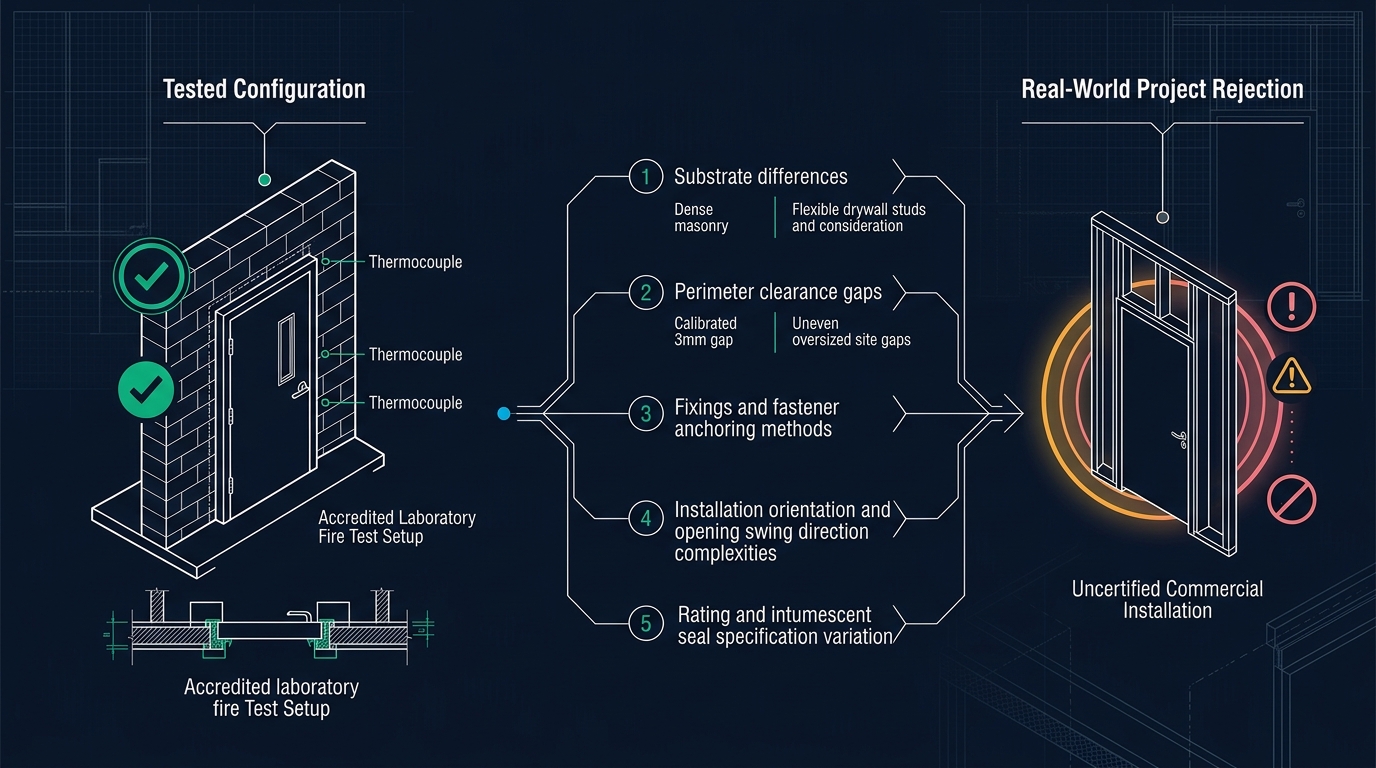
The work happens before the test, not after it: reviewing construction details, materials, fixings, clearances, and installation orientation against the intended fire rating and application — catching a mismatch between what's being tested and what's actually needed on site while it's still a design review conversation. From there, CODEX coordinates the actual test program, evaluates whether existing evidence can genuinely be extended or whether a fresh sample is required, and structures product families so testing covers the most ground for the least spend, without weakening the evidence behind it.
It's not about passing a test. It's about reaching credible market acceptance for the product, the application, and the geography it's actually going into.
Before the next test program starts
The question worth asking isn't "will this pass." It's "does the configuration we're about to test actually match what a consultant or authority will expect to see on the project this is going into."
Talk to CODEX before your next fire compliance program starts